Last year our company opened a new division – selling seed, crop-protection products and micro-fertilizers. One of our partners, the “KWS-UKRAINE” plant, has already accepted seed for processing from more than 90% of production acreage. Today we want to introduce you to the first technological operations in turning raw material into seed.
The modern seed-conditioning complex of “KWS-UKRAINE” LLC in Kamianets-Podilskyi has already accepted seed for processing from more than 90% of the sown acreage under production, concentrated in Khmelnytskyi, Ternopil and Vinnytsia regions.
According to the latest data, this season we have record yield figures for KWS corn hybrids on these plots, thanks above all to the field-production team’s quality work and favorable weather conditions during flowering and grain fill. So the seed obtained will be the highest quality and will meet every KWS standard.
As a reminder, our company has developed its own seed-quality standards, which are a notch above Ukrainian ones, specifically:
- physical purity – 99.5%
- germination – 94%
- ColdTest – 88%
- moisture – 12.5%
- thousand-kernel weight – 220–360 g
- genetic purity:
off-types – no more than 0.75%
self-pollinated – no more than 2.0%
In the lab, every quality metric for the seed processed at the plant is monitored. Samples are taken at every processing stage, and during drying – every half hour.
Right now, seed that’s already gone through the first production cycle (accepting raw material, taking samples for lab analysis, cleaning off leaf and stalk material, sorting out atypical and disease-affected ears, drying, threshing with preliminary cleaning) is placed in octabins for temporary storage in the raw-material warehouse, and the next processing stages (grading, cleaning out broken seed, treatment, packaging and palletizing) will happen soon, before the seed reaches the finished-goods warehouse.
Let’s tell you more about the technological processes currently underway at our plant.
1. Accepting raw material

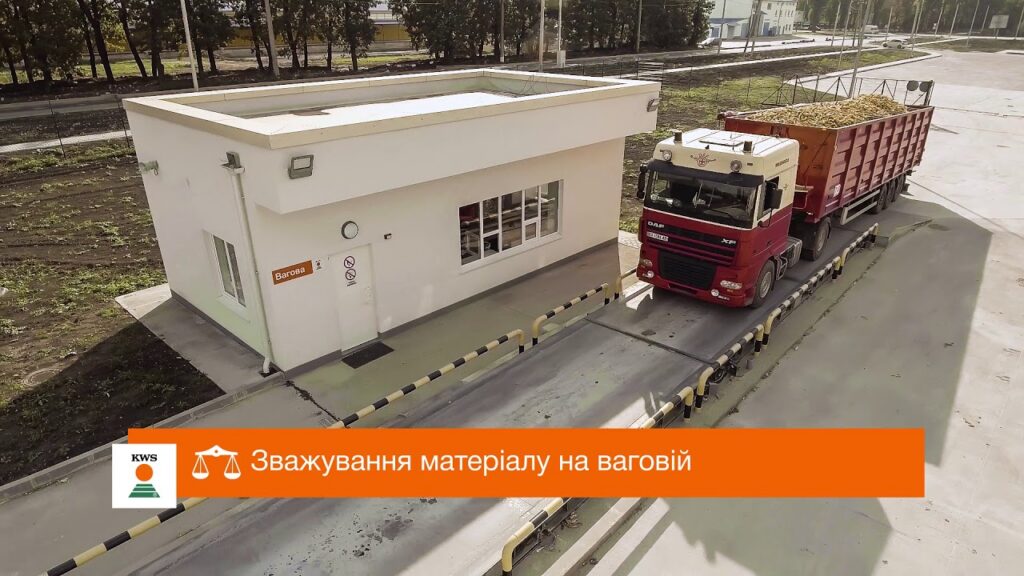
A truck arriving at the plant grounds is first weighed (maximum scale load up to 80 t), and then heads to unloading. The receiving pit allows for both side and rear unloading of the vehicle.
The receiving pit’s floor is mobile, its segments move back and forth, which ensures the material moves through the pit.

The receiving pit’s unloading throughput is 30 t/hour. From there, corn ears head via conveyors to the sorting and husk-cleaning shop.
2. Taking samples for lab analysis

From every batch, samples of corn ears are taken for lab analysis to check moisture, disease-incidence level and seed germination.
3. Cleaning off leaf and stalk material

Corn ears moving along the leaf-and-stalk-material removal line.

Four “huskers”, which separate the ears from their husks, are fitted with rubberized rollers that move in pairs in inward and outward directions, catching the husk and gently pulling it off.
4. Sorting the ears

After the husks are mechanically removed, shop workers visually inspect the ears and, if needed, remove atypical or damaged ones.
5. Drying the grain

The next processing stage is drying the grain.

The cleaned ears move to the drying station – the seed goes into the drying chambers.

The two-pass reversible dryer (the drying shop) has a total drying throughput of 12,000 t of seed in ears. The dryer’s burners run on natural gas, drying is carried out at an air temperature no higher than 40°C, using the reversible method. At this stage too, the lab monitors seed and ear moisture – until seed moisture reaches 10–14%, and ear moisture – 9–12%. The drying cycle for one chamber takes 3-4 days.

The grain-drying process is monitored automatically around the clock.
6. Threshing and preliminary cleaning

After drying, the ears go to the threshing station, with a throughput of 20 t/hour, where the corn kernels are separated from the cobs.

Seed threshing with preliminary cleaning (undersized and oversized seed is removed right during threshing).
7. Storage in octabins

After threshing and preliminary cleaning, the seed is loaded into special cardboard boxes (octabins) with a capacity of up to 1 t, which are then stored in the raw-material warehouse.
We also invite you to watch a video revealing all the secrets of producing KWS corn seed:

KWS. Even more quality seed for Ukrainian agricultural producers.